Artificial intelligence is moving beyond systems that simply answer prompts. A new generation of AI applications can plan tasks, use tools, retrieve information, execute code and coordinate multiple steps with limited human intervention. These systems are known as AI agents, and the infrastructure behind them is becoming just as important as the models they use.
This shift is changing how businesses think about AI hosting. An agentic workflow may involve language-model inference, API requests, database queries, browser automation, background jobs and isolated code execution, all within one user request. As these activities run concurrently, organisations need predictable compute, sufficient memory, fast storage and strong security boundaries.
That is why agentic AI infrastructure is becoming an important consideration in 2026. For teams running persistent agents, internal automation platforms or AI-powered services, dedicated servers can provide the control and consistent resources needed to operate these workloads reliably.
What Is Agentic AI Infrastructure?
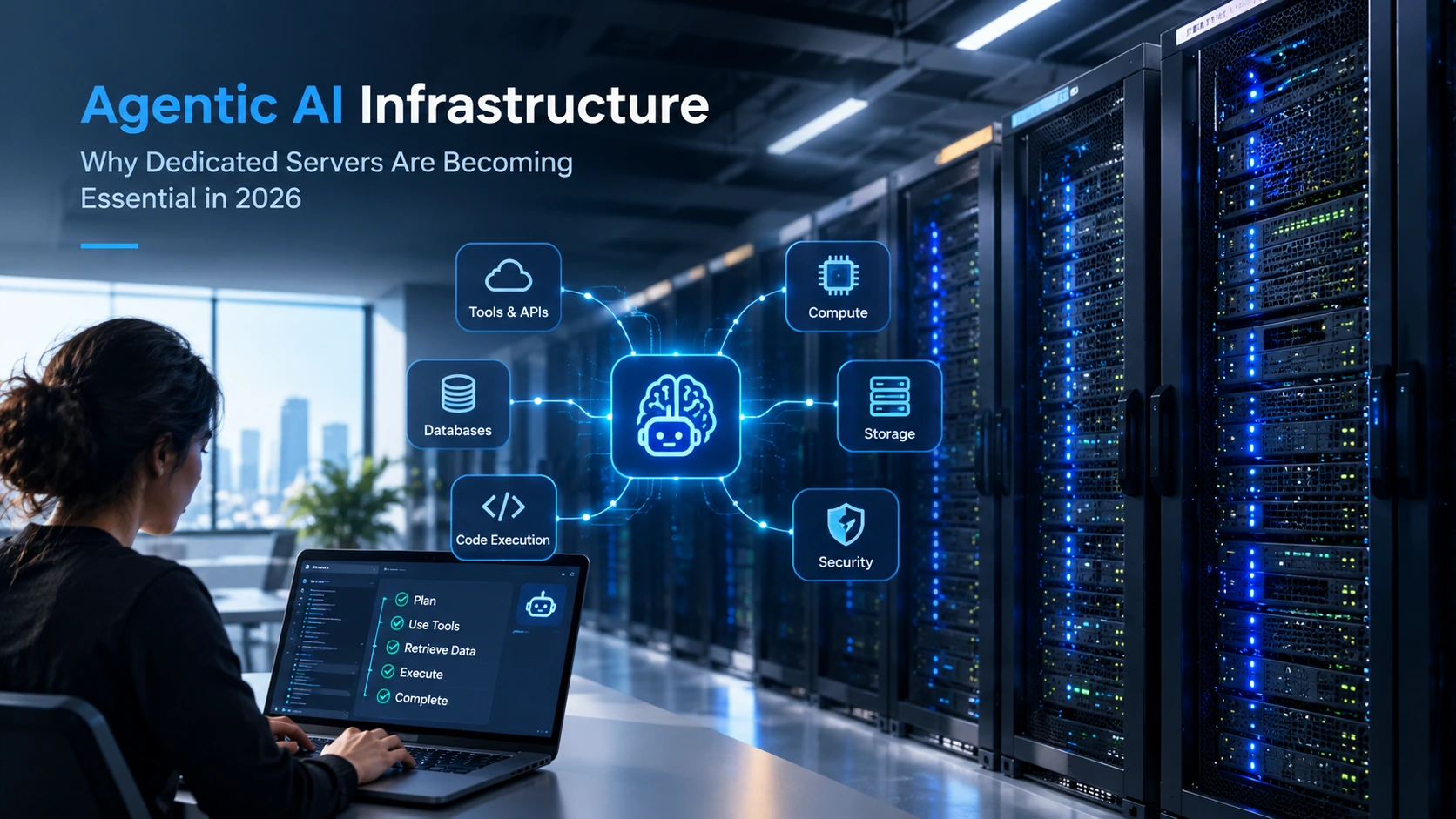
Agentic AI infrastructure is the combination of hardware, software, networking and security controls that allows AI agents to operate continuously and complete multi-step tasks. Unlike a conventional chatbot that generates a response and waits for another prompt, an AI agent can interpret a goal, decide what action to take, call an external tool, evaluate the result and continue until it reaches an outcome or needs human approval.
A typical agentic AI system may include:
An AI model that interprets instructions, reasons over context and generates decisions.
An orchestration layer that manages agent workflows, tool calls, retries and task state.
CPU resources for application logic, scheduling, API handling and concurrent processes.
System memory for active agents, context, caches, queues and supporting services.
GPUs or other accelerators when model inference, fine-tuning or parallel numerical workloads require them.
Fast storage for model files, vector indexes, logs, databases and temporary working data.
Networking and security services that connect agents to approved tools, users and data sources.
The exact configuration depends on the work being performed. An agent that mainly calls hosted AI APIs may need substantial CPU, RAM and network capacity but little local GPU power. A platform that also hosts large language models locally will have additional GPU memory and accelerator requirements.
Agentic AI vs. Traditional AI Workloads
Traditional AI workloads are often organised around a defined operation, such as training a model, processing a dataset or returning an inference result. Agentic systems are more dynamic. One request can trigger several model calls, tool executions, retrieval operations and background processes. The workload can therefore vary significantly according to the task, the number of agents and the tools they are allowed to use.
| Area | Traditional AI application | Agentic AI application |
|---|---|---|
| Workflow | Often a defined training or inference pipeline | Multi-step tasks with planning, tool use and feedback |
| Compute pattern | Can be intensive but relatively predictable | Mixed, bursty CPU, memory, network and accelerator use |
| Concurrency | Usually tied to jobs, batches or inference requests | Multiple agents and subtasks may run at once |
| State | Often centred on model inputs and outputs | May maintain task state, memory, queues and execution history |
| Security focus | Protect models, datasets and endpoints | Also restrict tool permissions, code execution and agent access |
This distinction matters when selecting hosting. A server sized only for occasional model inference may struggle when it must also coordinate dozens of active agents, maintain browser sessions, run containers and query databases at the same time.
Why AI Agents Need More Than GPU Power
GPUs are important for many AI deployments, but they are not the only resource that determines agent performance. The surrounding infrastructure can become the bottleneck even when model inference is fast. A balanced agentic AI server must account for CPU capacity, RAM, storage, GPU resources where required, and network throughput.
1. CPU: The Execution Layer for AI Agents
The CPU handles much of the work that makes an agent useful outside the model itself. It runs orchestration frameworks, application servers, task queues, browser automation, data transformations, API integrations, database clients and isolated execution environments. When several agents perform these operations simultaneously, available CPU cores and per-core performance both matter.
High-core-count server processors can support parallel workloads such as multiple agent workers, concurrent tool calls and background services. At the same time, latency-sensitive components may benefit from strong single-thread performance. This is why CPU selection should be based on the actual workflow rather than core count alone.
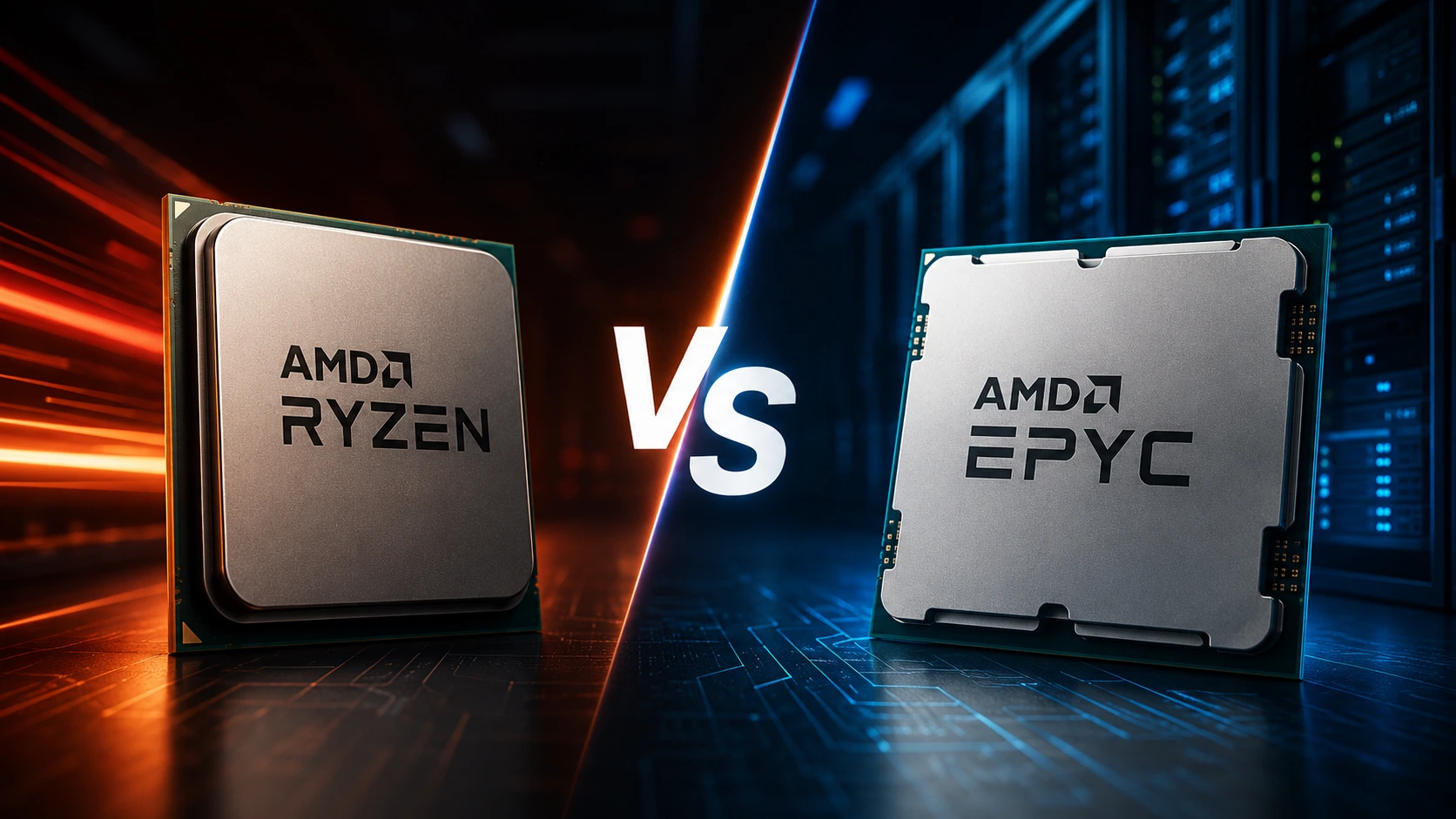
AMD EPYC processors are one option for server environments that need substantial multi-core throughput, memory capacity and high-bandwidth I/O. Businesses evaluating this platform can review the AMD Dedicated Servers from KW Servers page and compare available configurations against their application requirements.
2. RAM: Keeping Concurrent Agents Responsive
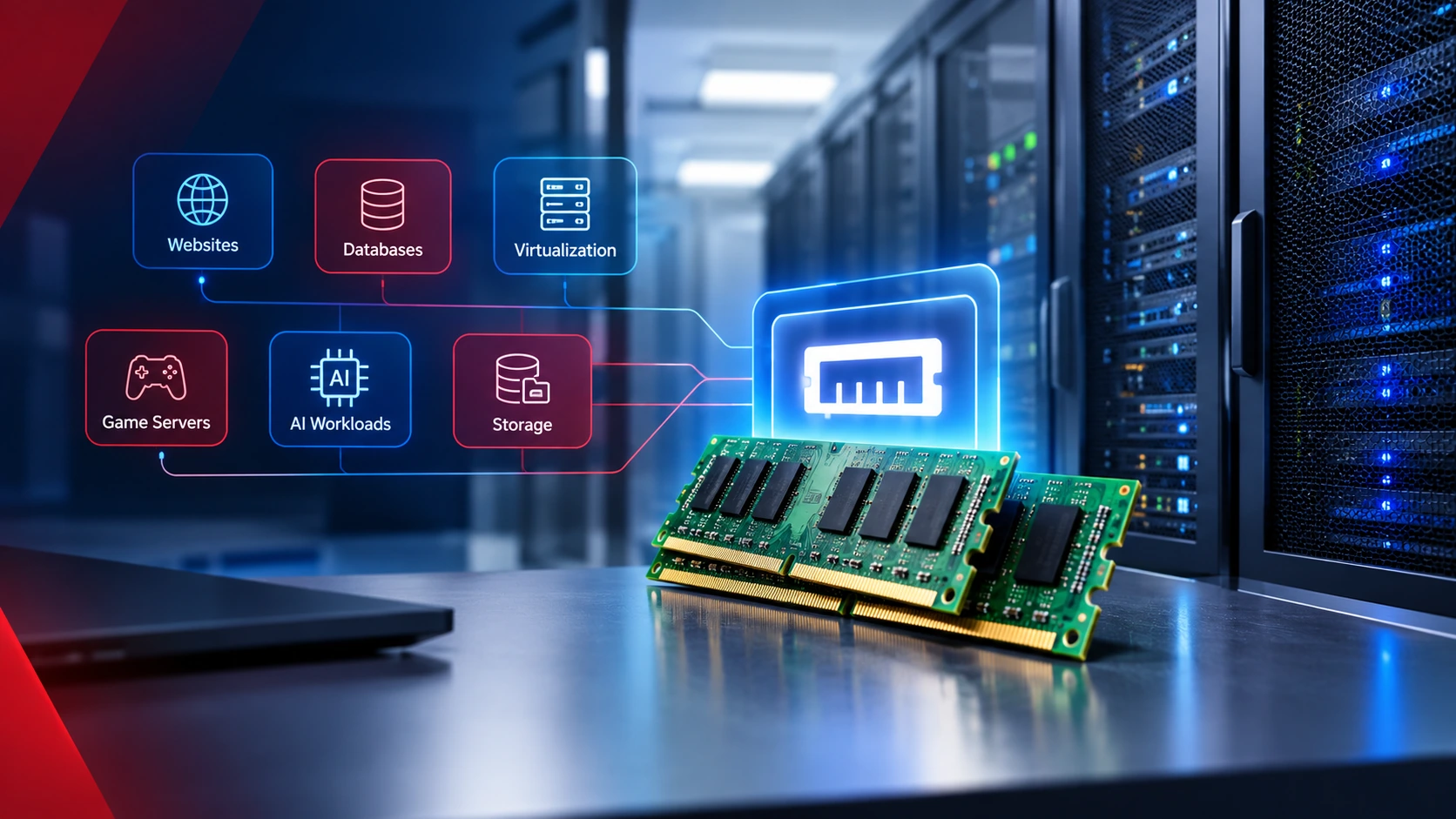
Memory capacity becomes important as the number of active agents increases. Each worker may hold conversation context, intermediate results, browser state, cached data, runtime libraries and application processes in memory. Vector databases, retrieval services and local model components can add further demand.
Insufficient RAM can cause swapping, slower response times or process failures under load. When planning capacity, estimate memory per worker, include the operating system and supporting services, and leave headroom for traffic spikes. Monitor real usage during representative tests instead of relying only on a theoretical minimum.
3. GPU: Accelerating Local Model Inference
A GPU is most valuable when the infrastructure runs its own language models, embedding models, image models or other parallel workloads. GPU memory (VRAM) determines which models and batch sizes can fit, while compute capability and memory bandwidth influence throughput. Larger models, longer context windows and more simultaneous inference requests generally increase accelerator requirements.
Not every agent platform needs a dedicated GPU. If agents use external model APIs, the server may primarily coordinate tasks and process results. If privacy, latency, predictable inference costs or control over model deployment are priorities, hosting models locally on a GPU dedicated server may be a better fit.
KW Servers provides GPU Dedicated Servers with options for AI inference, model training and other accelerated workloads. The available GPU, VRAM, CPU, RAM and storage should be matched to the model and expected concurrency, not selected by GPU name alone.
4. NVMe Storage and Network Connectivity
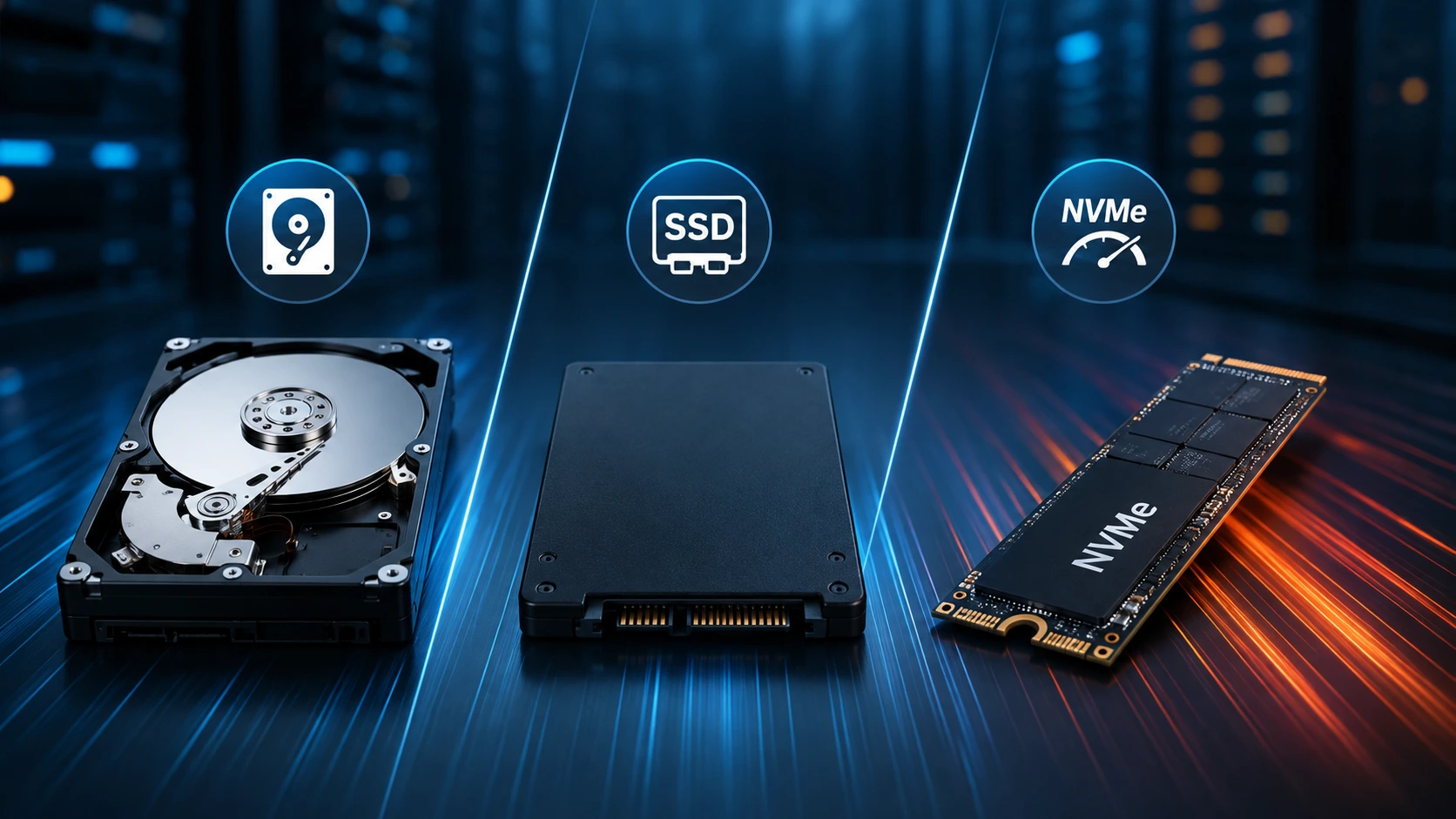
Agentic applications generate and retrieve data continuously. Fast NVMe storage can reduce delays when loading model files, reading vector indexes, accessing databases, writing logs and handling temporary files. Storage capacity also needs to account for datasets, model versions, checkpoints and retained execution records.
Network quality matters when agents call external APIs, retrieve documents, communicate with services or serve users across different regions. Evaluate bandwidth, latency, packet loss, routing and resilience alongside raw server specifications. For production systems, network reliability can affect the whole workflow even when the compute hardware is powerful.
Running Multiple AI Agents on a Dedicated Server
A single agent may be manageable in a modest environment, but production platforms often run several agents or worker processes at once. For example, a customer-support workflow could use one agent to classify a request, another to retrieve account information, and another to prepare a response for approval. A research workflow may run parallel agents to search sources, extract information and compare findings.
This concurrency creates resource contention if every process competes for the same CPU, memory, storage and network capacity. A dedicated server gives the operator direct control over the physical resources and how they are allocated. Workloads can be separated into containers or virtual machines, assigned CPU and memory limits, and monitored independently.
A practical deployment may use a task queue to control how many jobs run simultaneously, worker pools for different task types, and a separate inference service for model requests. This architecture helps prevent a long-running browser task or data-processing job from starving latency-sensitive services.
Dedicated Servers vs. Cloud Infrastructure for AI Agents
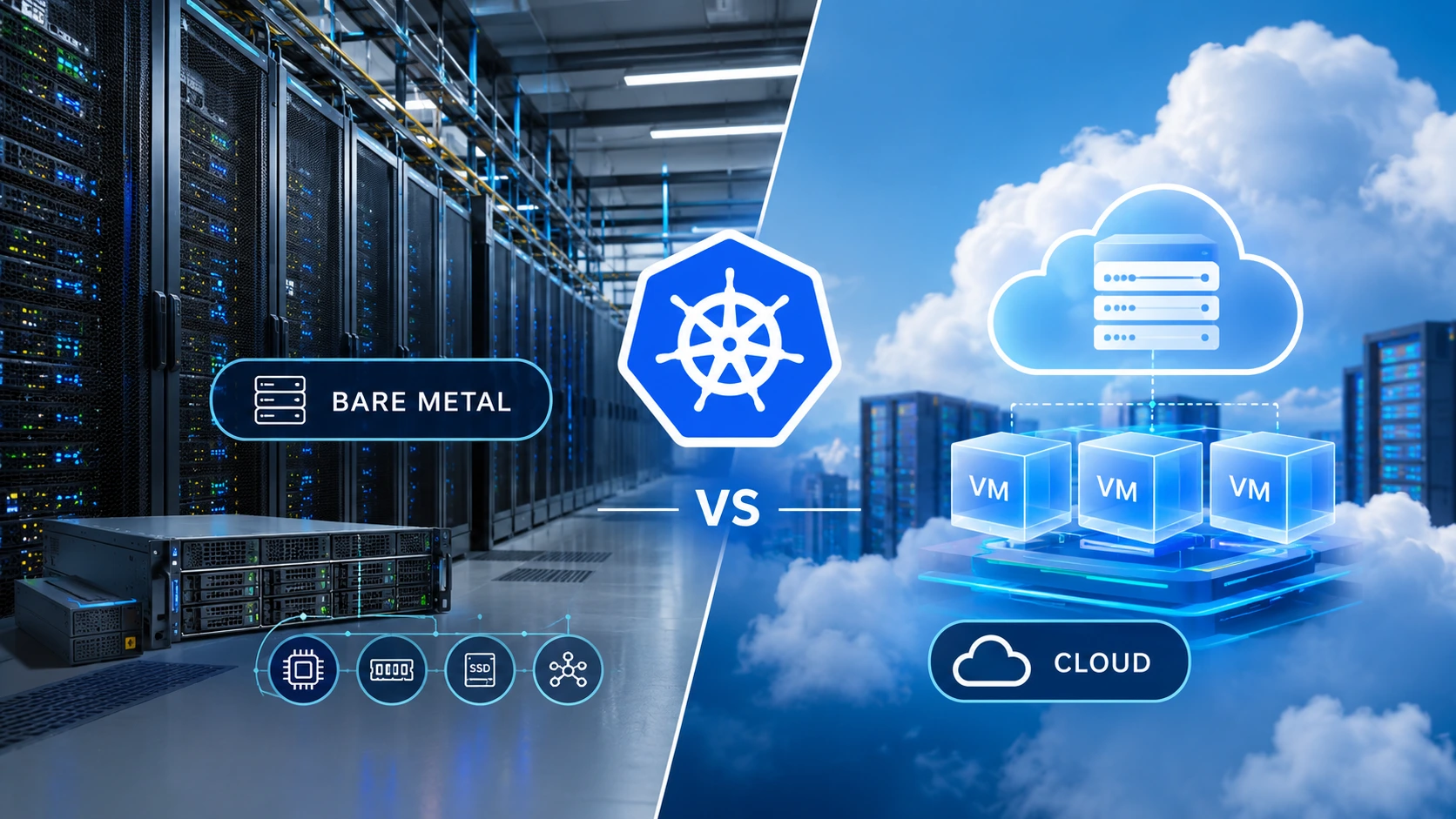
Cloud infrastructure is useful for rapid experiments, short-lived workloads and systems with unpredictable demand. It can provide managed databases, queues, orchestration tools and access to accelerators without requiring a team to maintain every component. However, costs and performance can become harder to predict when workloads run continuously or require large amounts of compute, storage and data transfer.
A dedicated server provides exclusive access to a physical machine. This can make resource allocation, software configuration and sustained workload planning more predictable. It is particularly relevant when an organisation operates persistent agent workers, self-hosted models or services that need consistent CPU and memory capacity.
| Consideration | Dedicated server | Cloud infrastructure |
|---|---|---|
| Resource access | Exclusive physical hardware | Depends on instance type and service model |
| Cost model | Often a fixed recurring server cost | Can be usage-based with variable charges |
| Control | Direct control over OS, drivers and system configuration | Control varies by provider and managed service |
| Scaling | Usually requires a larger server or additional machines | Can offer faster on-demand provisioning |
| Best fit | Steady workloads and sustained resource demand | Experiments, variable demand and managed components |
There is no universal winner. Some teams use a hybrid architecture: dedicated servers for persistent agent execution or self-hosted inference, combined with cloud services for burst capacity, managed databases or specialised tools. Compare total cost of ownership, including support, storage, bandwidth, backups, operations and scaling, not just the headline compute price.
Security, Isolation and Reliability for Agentic AI
AI agents can interact with systems and data, so their security requirements extend beyond protecting a model endpoint. An agent may process untrusted documents, follow instructions embedded in retrieved content, access APIs or execute code. If its permissions are too broad, a compromised workflow or prompt-injection attack could expose sensitive information or trigger unintended actions.
A production-ready environment should include controls such as:
Least-privilege access: give each agent only the permissions and credentials required for its assigned task.
Execution isolation: run untrusted code and browser tasks in restricted containers, virtual machines or sandboxed environments.
Secrets management: store API keys and tokens securely, rotate credentials and avoid embedding secrets in prompts or logs.
Network segmentation: limit which internal services and external destinations each workload can reach.
Human approval: require confirmation before high-impact actions such as payments, account changes or destructive operations.
Monitoring and audit logs: record tool calls, access events, failures and resource usage while protecting sensitive data.
Backups and recovery: protect databases, agent state, configuration and important model assets.
Dedicated hardware can improve infrastructure-level control, but it does not automatically make an AI deployment secure. Security depends on operating-system hardening, application design, identity management, patching, network policy and continuous monitoring.
How to Choose a Dedicated Server for Agentic AI
The right server configuration depends on whether the machine will host models, coordinate agents, or do both. Start with the workload and scale assumptions, then select hardware. Use the following checklist when comparing AI dedicated server hosting options:
Define the workload: identify the models, agent framework, tools, databases and expected user traffic.
Estimate concurrency: calculate the number of active agents, worker processes and simultaneous inference requests.
Choose the CPU: compare core count, clock speed, memory support and I/O capabilities for the orchestration workload.
Size RAM: account for agent processes, context, caches, databases and operating-system overhead, with room for growth.
Select GPU capacity if needed: match VRAM and accelerator performance to model size, precision, context length and inference concurrency.
Choose storage: use fast NVMe for active model files, indexes, databases and workloads with frequent random reads and writes.
Check the network: assess bandwidth, latency, routing, DDoS protection and connectivity to users and external services.
Plan isolation and operations: confirm support for containers or virtual machines, remote management, backups and monitoring.
Benchmark before scaling: test realistic multi-agent workflows and measure CPU, RAM, GPU memory, storage latency and response times.
Avoid buying the largest configuration simply because the project uses AI. A CPU-focused server may be sufficient for API-driven agents, while a local LLM deployment may require substantial GPU memory. A workload test using representative prompts, tools and concurrency will provide a more useful sizing baseline than a generic “AI server” specification.
Why AMD EPYC Matters for Agentic AI Servers
The growing role of CPUs in AI infrastructure is receiving renewed attention. On November 10, 2026, AMD announced general availability of its 6th Gen AMD EPYC SP7 server processors, based on the Zen 6 architecture. AMD positioned the processor family for agentic AI, enterprise computing and cloud workloads, and described CPU roles across general-purpose services, GPU host nodes and agent sandboxes. AMD also noted that systems based on the new processors were shipping from leading server vendors.
The announcement reflects an important infrastructure point: agentic AI is not only a GPU problem. Agents need CPU resources to coordinate workflows, execute tools, manage services and support the systems surrounding model inference. The balance between CPU density, frequency, memory bandwidth, GPU acceleration and power efficiency will vary by deployment.
AMD’s published performance comparisons are based on its stated test configurations and assumptions; actual results depend on software, workload, memory configuration and system design. Businesses should validate performance with their own agent framework and concurrency profile before choosing a platform. The availability of a processor family also does not mean every hosting provider has deployed it, so confirm the exact CPU model in any server quotation.
The Role of Dedicated Servers in the Next Phase of AI
As AI agents move from demonstrations into business operations, infrastructure decisions will increasingly affect reliability, cost and security. Agentic applications combine model inference with application logic, tool execution, data retrieval and background processing. That combination places sustained demands on the full server platform.
Dedicated servers can provide a practical foundation for these workloads when teams need exclusive hardware, predictable resources and control over the software stack. CPU-focused AMD EPYC systems can support agent orchestration and concurrent services, while GPU dedicated servers can accelerate locally hosted models and inference. The best choice is the configuration that matches the actual workload, not simply the newest or most powerful hardware.
KW Servers offers AMD dedicated server solutions and GPU dedicated server hosting for businesses evaluating infrastructure for AI, machine learning and other demanding applications. Review the available hardware, compare it with your workload requirements and plan for security, monitoring and future capacity from the beginning.
Frequently Asked Questions About Agentic AI Infrastructure
What is agentic AI infrastructure?
Agentic AI infrastructure is the hardware and software environment used to run AI agents that plan tasks, call tools, retrieve data and execute multi-step workflows. It typically includes CPUs, RAM, storage, networking, orchestration software and GPUs when local model inference is required.
Do AI agents need a GPU server?
Not always. Agents that call external AI model APIs may run primarily on CPU and RAM. A GPU server becomes important when you host or fine-tune language models, run local inference, generate embeddings at scale or perform other accelerated workloads.
Why are dedicated servers useful for AI agents?
Dedicated servers provide exclusive physical resources and greater control over CPU, memory, storage, operating systems and workload isolation. They can be useful for persistent agent workloads that need consistent performance and predictable recurring infrastructure costs.
Is CPU or GPU more important for agentic AI?
It depends on the workload. CPUs handle orchestration, tool execution, API handling, databases and concurrent processes. GPUs accelerate model inference and training. A deployment that uses external model APIs may be CPU-heavy, while a self-hosted LLM platform may need substantial GPU memory and compute.
How much RAM does an AI agent server need?
There is no fixed amount. RAM requirements depend on the number of concurrent agents, framework overhead, browser sessions, context handling, caches, databases and whether models run locally. Measure memory use under realistic load and include capacity for peak concurrency.
Can multiple AI agents run on one dedicated server?
Yes. Multiple agents can share a dedicated server when CPU, memory, storage and network capacity are sufficient. Use queues, worker limits, containers or virtual machines, and monitoring to control resource contention and isolate workloads.
Are dedicated servers cheaper than cloud hosting for AI agents?
They can be more cost-predictable for workloads that run continuously, but the result depends on hardware requirements, utilisation, bandwidth, storage, support and operational costs. Cloud services may be more economical for short experiments or highly variable demand. Compare total cost over the expected usage period.