If you have been researching dedicated server solutions for your business, you have probably noticed two things: performance requirements keep climbing, and the hardware landscape is shifting fast. AMD's Zen 6 EPYC Venice processor marks a genuine inflection point, not just an incremental update, but a rethinking of what enterprise-grade dedicated hosting can deliver.
At KW Servers, we work with dedicated servers every single day. When new silicon arrives that changes the calculus on core density, memory bandwidth, and energy efficiency all at once, we pay close attention. This guide explains what the Zen 6 EPYC Venice architecture actually means for businesses that rely on bare-metal servers, and why this generation deserves serious consideration when you are evaluating your next dedicated hosting solution.
What You Will Learn in This Guide
-
What is AMD Zen 6 EPYC Venice and why it matters
-
Core architecture improvements over previous generations
-
Real-world performance gains for dedicated server workloads
-
How EPYC Venice compares to Intel Xeon in dedicated hosting
-
Which business use cases benefit the most
-
How KW Servers delivers EPYC Venice bare-metal performance
-
Key questions to ask before choosing a dedicated server provider
1. What is AMD Zen 6 EPYC Venice, and why should hosting buyers care?
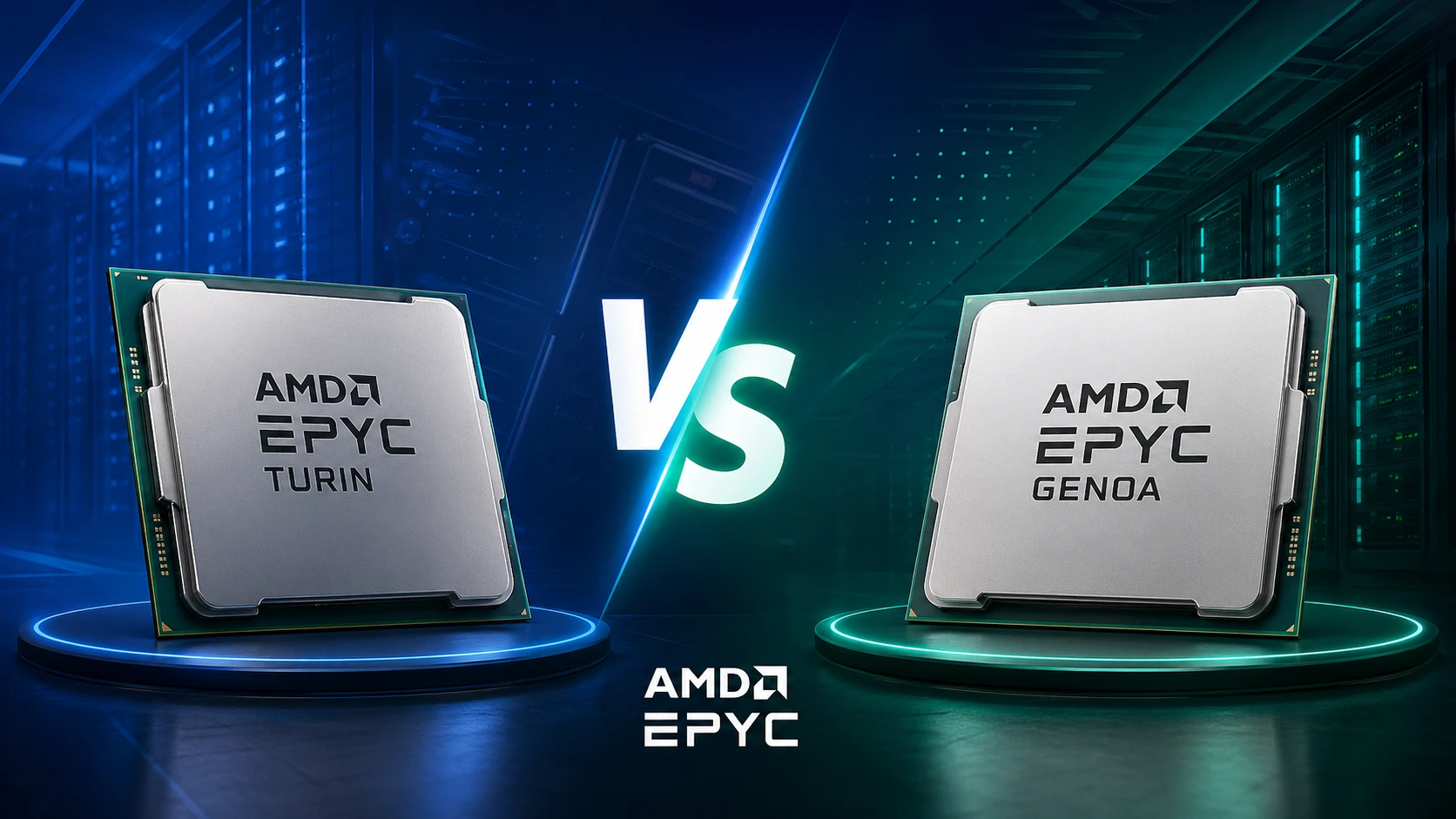
The EPYC Venice line is AMD's sixth-generation server CPU family, built on the Zen 6 microarchitecture. It succeeds the EPYC Genoa (Zen 4) and EPYC Turin (Zen 5) families, continuing AMD's strategy of offering the highest core counts in the x86 server market while dramatically improving per-core efficiency.
For buyers shopping for dedicated servers, the processor family sitting inside the chassis is one of the most consequential decisions you make. It dictates how many virtual machines you can run, how quickly databases execute complex queries, how smoothly high-traffic web applications respond under load, and how much your electricity bill looks at month's end.
The Zen 6 architecture is not just about raw clock speed. AMD engineered improvements across the entire stack: larger per-core caches reduce memory-latency bottlenecks, the memory controller supports higher-bandwidth DDR5 channels, PCIe 6.0 support doubles GPU and NVMe throughput compared to the previous generation, and the power-delivery architecture makes Venice processors meaningfully more efficient per watt than anything that came before.
The Dedicated Server Hosting Context
When a dedicated server provider like KW Servers deploys Venice-based hardware, you get the full benefit of that silicon without sharing resources with anyone else. That is the fundamental promise of dedicated hosting: a physical machine allocated entirely to your workload. On shared hosting or even many cloud instances, noisy neighbors and virtualization overhead chip away at peak performance. On a bare-metal dedicated server powered by Zen 6 EPYC, every core, every memory channel, and every PCIe lane belongs to you.
2. Zen 6 Architecture Improvements That Directly Impact Server Performance
Understanding what changed under the hood helps you translate marketing claims into real-world expectations. Here are the architectural pillars that make Zen 6 EPYC Venice a step forward for dedicated hosting environments.
Higher Core Density Without Sacrificing Single-Thread Performance
Zen 6 continues AMD's chiplet-based design, allowing EPYC Venice CPUs to scale to very high core counts within a single socket. Crucially, AMD achieved this while also improving instructions-per-clock (IPC) compared to Zen 5. The result is a processor that handles parallel, multi-threaded server workloads, rendering, transcoding, parallel database operations, containerized microservices, while also delivering strong single-thread throughput for latency-sensitive tasks like real-time queries and interactive web applications.
Expanded L3 Cache for Lower-Latency Data Access
One of the most impactful changes in Zen 6 is the expanded last-level cache (L3) per compute die. More cache means more frequently accessed data lives closer to the execution units, reducing trips out to system RAM. For database workloads, in-memory caches, and analytics engines like ClickHouse or Redis, this translates directly into faster query response times and higher transaction throughput on dedicated server hardware.
DDR5 and High-Bandwidth Memory Support
EPYC Venice platforms support DDR5 memory at elevated speeds, increasing memory bandwidth substantially over DDR4-based platforms. Memory bandwidth matters enormously for workloads that move large datasets, scientific computing, machine learning inference, large-scale log processing, and real-time analytics. Dedicated servers built on Venice platforms can be configured with large memory footprints, making them well-suited for memory-hungry enterprise applications.
PCIe 6.0 Next-Generation I/O for Storage and GPUs
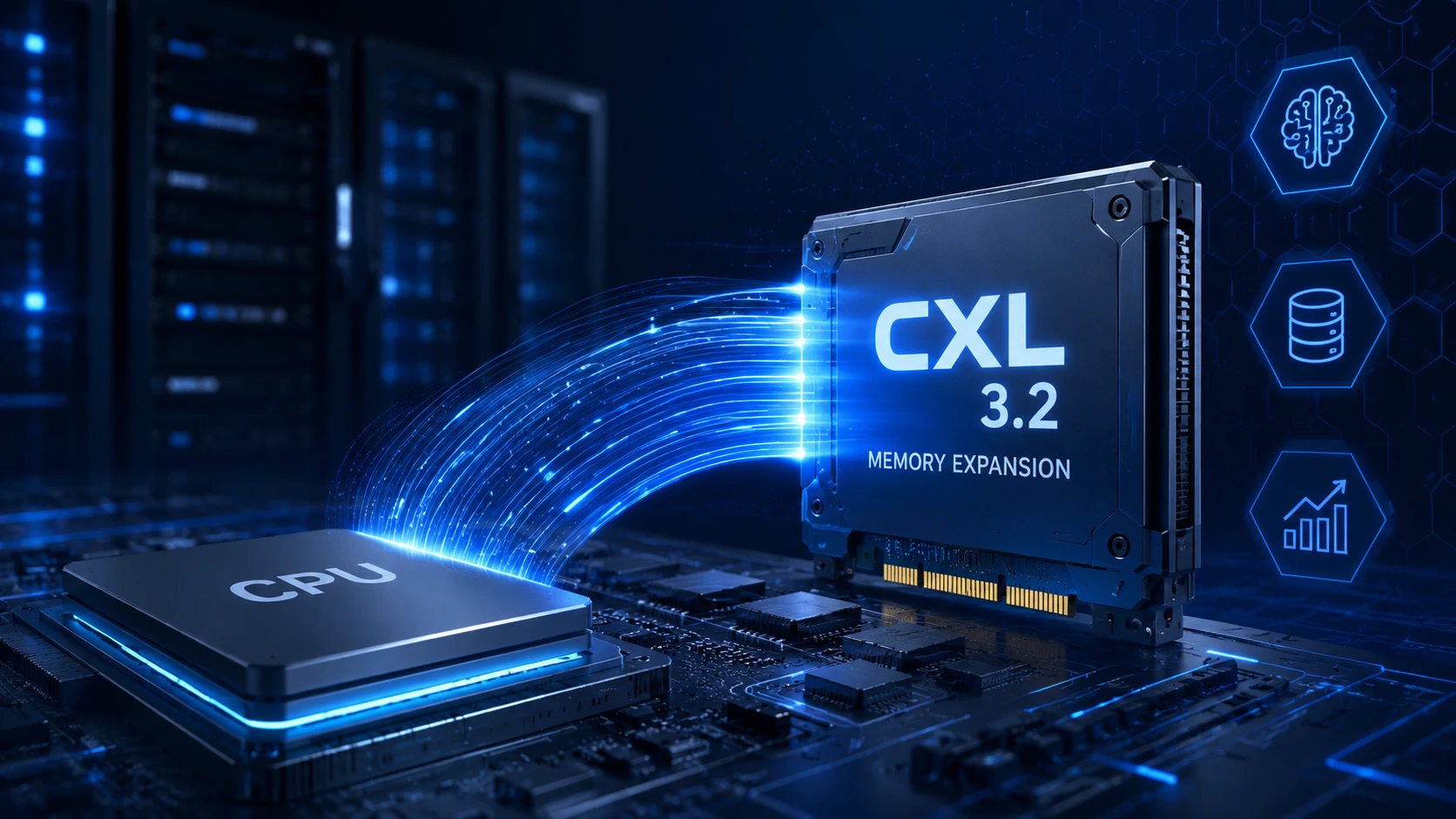
PCIe 6.0 doubles the bandwidth available to each lane compared to PCIe 5.0. In a dedicated server context, this means NVMe storage arrays can push data faster, GPU accelerators receive data from system memory without bottlenecking on the interconnect, and high-speed networking cards operate closer to their theoretical maximums. For AI inference workloads, high-frequency trading systems, and video streaming platforms, this I/O uplift is meaningful and measurable.
Improved Power Efficiency, Lower TCO, Greener Infrastructure
Every watt consumed by your dedicated server ultimately appears on an energy bill. Zen 6's improved performance-per-watt ratio means you accomplish more compute per unit of power. For businesses running always-on workloads, e-commerce platforms, SaaS applications, financial services, and media delivery, this efficiency translates directly into lower total cost of ownership (TCO) over the lifespan of the server.
3. Real-World Performance Gains: What EPYC Venice Means for Your Workloads
Architectural specifications only tell part of the story. Let us translate the hardware improvements into concrete outcomes across common dedicated server use cases.
Web Hosting and High-Traffic Applications
For managed dedicated servers running Apache, Nginx, or LiteSpeed alongside PHP-FPM or Node.js, Zen 6's stronger single-threaded performance reduces response times at the application layer. Higher core counts allow you to handle more concurrent connections without queuing, which is critical during traffic spikes. E-commerce platforms built on Magento, WooCommerce, or custom stacks benefit directly from the combination of low latency and high concurrency capacity.
Database Servers: MySQL, PostgreSQL, MongoDB
Database engines are among the most demanding workloads in dedicated server environments. The expanded L3 cache in Zen 6 significantly reduces cache misses during complex joins and index scans. Higher DDR5 memory bandwidth accelerates large sort operations and aggregation queries. If your application depends on a database tier for every user interaction, as virtually every production web application does, an EPYC Venice dedicated server reduces query latency and allows you to sustain higher queries-per-second before reaching hardware limits.
AI Inference and Machine Learning Workloads
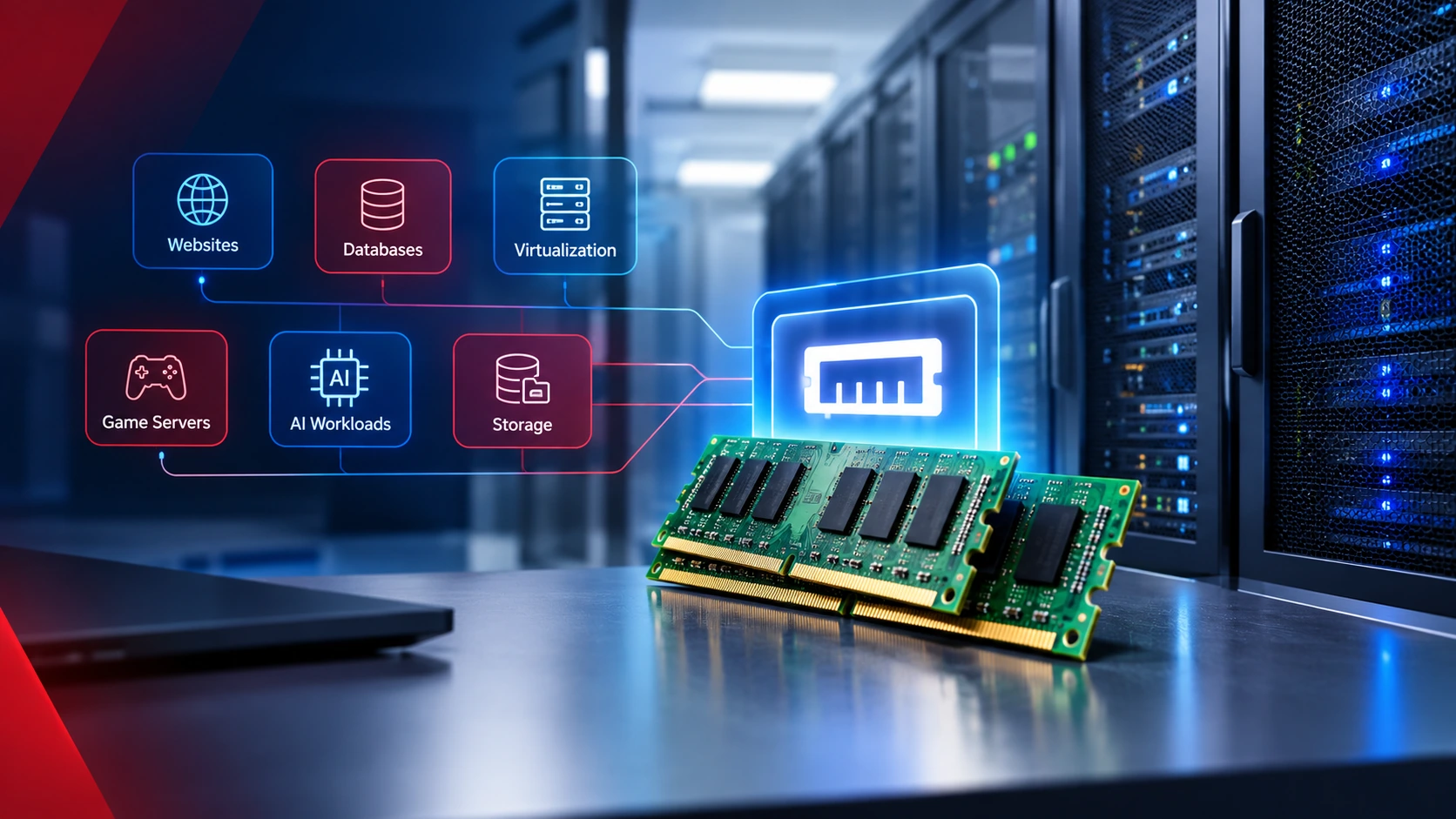
Not every AI task requires a GPU cluster. CPU-based inference for smaller models, embedding generation, natural language processing pipelines, and recommendation engines run efficiently on high-core-count EPYC hardware. With PCIe 6.0 support enabling faster GPU attachment when you do need accelerators, and high-bandwidth DDR5 enabling rapid data feeding to inference engines, Venice-based dedicated servers fill an important niche in AI infrastructure, particularly for businesses running inference at scale without the complexity of GPU-native deployments.
Virtualization and Private Cloud
Many organizations use dedicated servers as the foundation for a private cloud or virtualization platform running VMware vSphere, Proxmox, or KVM. The high core counts in EPYC Venice allow you to run a larger number of virtual machines per physical host, improving hardware utilization. AMD's virtualization extensions (AMD-V) are mature and well-supported across all major hypervisors, and the improved memory bandwidth in Zen 6 reduces the overhead associated with memory-intensive VM workloads.
Game Server Hosting
Game servers, whether running Minecraft, ARK, Rust, or custom multiplayer titles, are often single-threaded or lightly threaded workloads where per-core clock speed and cache responsiveness matter most. Zen 6's IPC improvements mean EPYC Venice punches harder per core than its predecessors, enabling smoother tick rates and better player experience under load. Dedicated game servers on Venice hardware can host more concurrent players or more server instances from a single chassis.
4. EPYC Venice vs. Intel Xeon: Choosing the Right Dedicated Server CPU
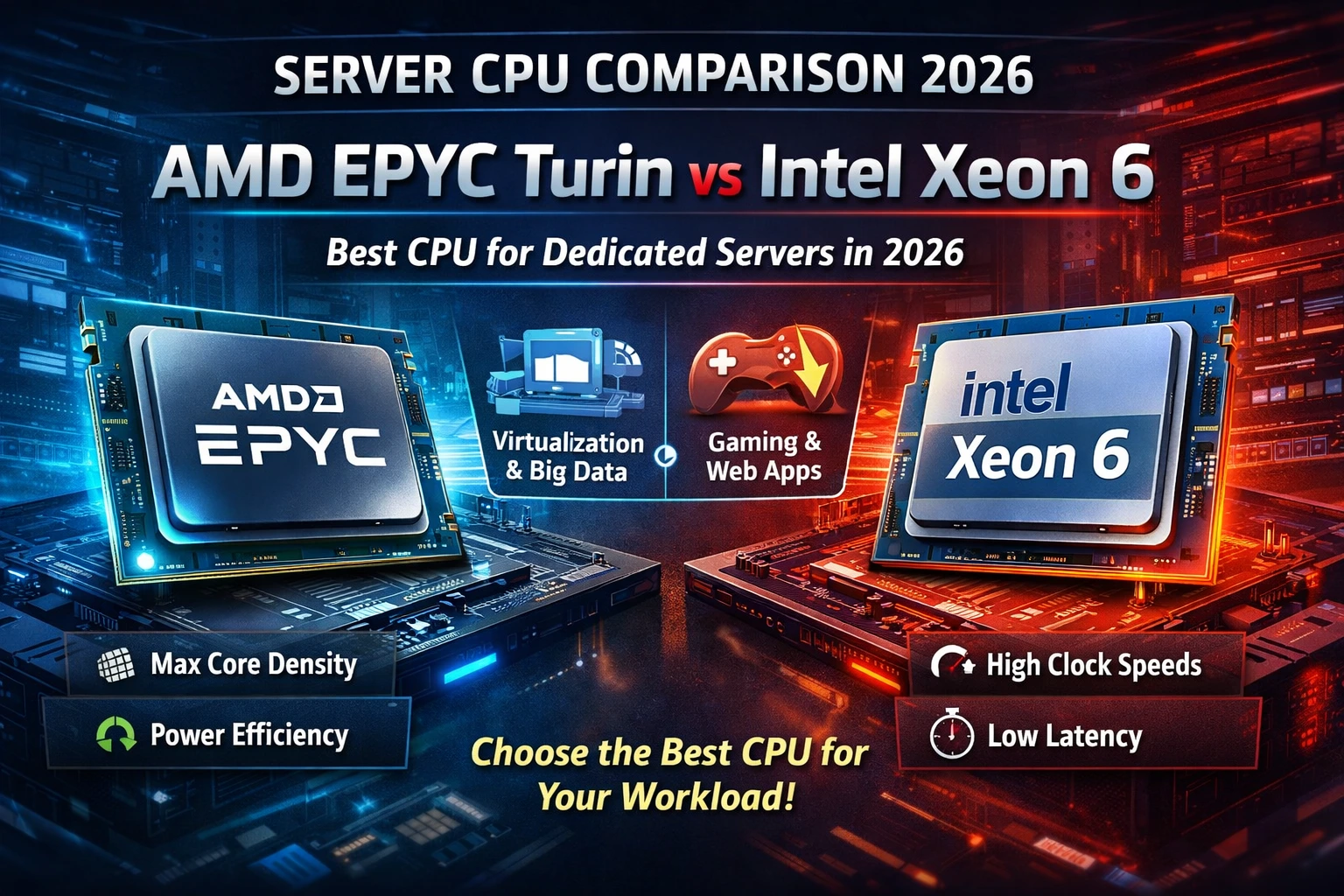
Intel's Xeon Scalable processors remain a solid choice for certain dedicated hosting scenarios, and KW Servers offers both platforms. Understanding the trade-offs helps you make an informed decision.
Where EPYC Venice Has the Edge
-
Core count: EPYC Venice offers higher core counts per socket, making it better for massively parallel workloads.
-
Memory bandwidth: More memory channels and DDR5 support provide higher aggregate bandwidth.
-
Cache size: A larger L3 cache per core reduces memory latency for data-intensive applications.
-
PCIe lanes: More available PCIe lanes support larger storage and GPU configurations.
-
Power efficiency: Better performance-per-watt reduces operating costs over time.
Where Intel Xeon May Still Fit
-
Ecosystem compatibility: Some enterprise software and ISV certifications have historically favored Intel.
-
Specific workloads: Certain instruction set optimizations in newer Xeon variants may favor specific software.
-
Hardware availability: Depending on your provider and geography, Xeon-based dedicated servers may have faster delivery or better upgrade options.
For the majority of new dedicated server deployments in 2025 and beyond, EPYC Venice represents a stronger baseline. If you are not locked into a software stack that demands Intel, the Venice platform's combination of core density, cache architecture, and memory bandwidth makes it the default recommendation for performance-oriented dedicated hosting.
5. Who Benefits Most from EPYC Venice Dedicated Servers?
While virtually any compute-intensive workload benefits from better hardware, certain use cases see the most dramatic returns from upgrading to or starting fresh on an AMD Zen 6 EPYC Venice dedicated server.
-
SaaS companies and application developers: Multi-tenant SaaS platforms need consistent, predictable performance across all customer instances. EPYC Venice's combination of high core counts and strong per-core performance allows you to maintain service-level agreements even during peak usage without over-provisioning.
-
E-commerce and retail platforms: High-traffic retail environments, especially around seasonal peaks, need dedicated server infrastructure that does not buckle under load. A bare-metal dedicated server on EPYC Venice handles concurrent checkout flows, inventory queries, and personalization logic without the latency spikes associated with shared cloud resources.
-
Managed service providers (MSPs) and hosting companies: MSPs building infrastructure for their own clients benefit from EPYC Venice's exceptional VM density. More virtual machines per physical host means more efficient infrastructure utilization and better margins, without compromising the performance that end customers expect.
-
Financial technology and trading platforms: Fintech platforms require both high throughput and low latency. Zen 6's cache improvements and memory bandwidth directly reduce the time-per-transaction for order management systems, risk calculation engines, and real-time data pipelines.
-
Media, streaming, and content delivery: Video transcoding, large asset management, and content delivery infrastructure are memory bandwidth-intensive. EPYC Venice's DDR5 support and high-bandwidth architecture keep transcoding pipelines moving and reduce buffering delays in delivery stacks.
-
Scientific computing and research: Academic and research institutions running simulation workloads, bioinformatics pipelines, or climate modeling benefit immediately from the core-density and memory bandwidth improvements in Venice. Dedicated server deployments give researchers full access to hardware resources without contention.
6. How KW Servers Delivers AMD EPYC Venice Bare-Metal Performance
Choosing the right processor is only part of the equation. The dedicated hosting provider you work with determines how that hardware is configured, maintained, supported, and delivered. At KW Servers, our approach to EPYC Venice deployment reflects years of bare-metal hosting experience.
Hardware Optimized for Real Workloads
Our EPYC Venice dedicated servers are configured with DDR5 ECC memory, NVMe storage solutions that leverage PCIe 6.0 bandwidth, and high-speed networking up to 100 Gbps. Every component is selected to complement the processor's capabilities rather than creating bottlenecks elsewhere in the system.
Full Root Access No Hypervisor Overhead
Our dedicated server hosting gives you full root or administrator access to your machine. There is no hypervisor between your workload and the hardware, no shared tenancy, and no resource contention. What the EPYC Venice CPU benchmarks at is what your applications get.
Rapid Provisioning with Flexible Configuration
KW Servers deploys dedicated servers rapidly, with options to customize RAM, storage type, capacity, operating system, and network bandwidth to match your specific requirements. Whether you need a single high-performance dedicated server for a flagship application or a cluster of EPYC Venice nodes for a private cloud build-out, we can accommodate the configuration.
24/7 Expert Technical Support
Dedicated server environments require hands-on expertise when issues arise. Our support team understands server infrastructure at a hardware and OS level, not just the network layer. When you have a question about tuning your EPYC Venice configuration for maximum throughput, or need urgent assistance during a production incident, you reach engineers who understand the platform.
Data Center Infrastructure Built for Performance
Processing power at the CPU level means little if the data center infrastructure introduces latency or reliability issues. KW Servers operates out of Tier III and Tier IV data center facilities with redundant power, cooling, and network connectivity, ensuring that your EPYC Venice dedicated server performs at its best around the clock.
7. Key Questions to Ask Before Choosing a Dedicated Server Provider
Selecting a dedicated hosting provider is not just about finding the best hardware specification. Here are the questions that reveal whether a provider can actually deliver on the promise of enterprise-grade dedicated server performance.
-
What processor generation is in the server? - Do not assume "EPYC" means Venice. Verify the exact CPU model and generation.
-
What memory type and speed is configured? - DDR5 at high speeds is a meaningful differentiator on Venice platforms.
-
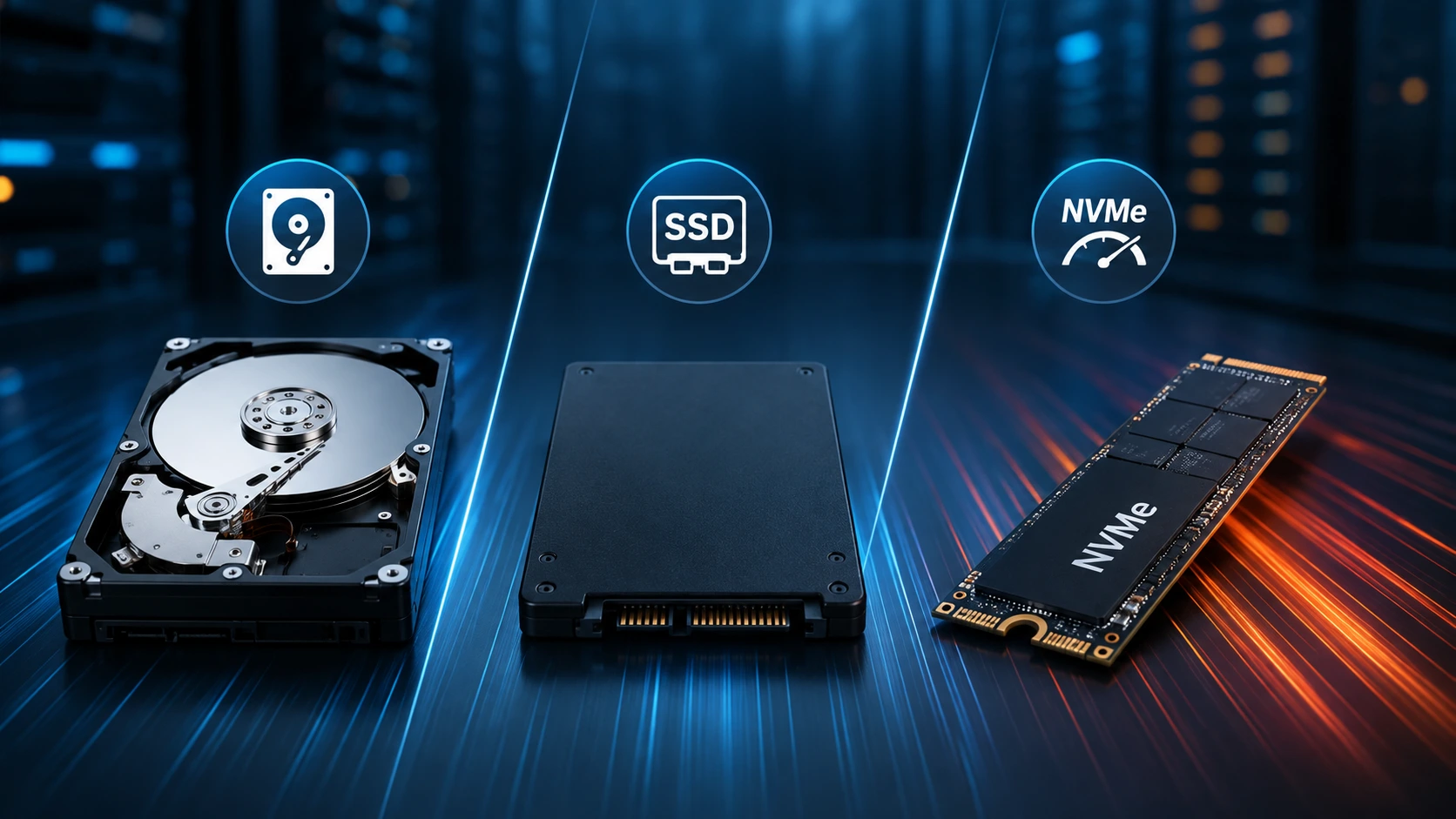
What storage interface is used? - NVMe over PCIe 5.0 or 6.0 versus SATA SSD makes a substantial difference for I/O-heavy workloads.
-
What network speeds are available, and how is bandwidth metered? - Unmetered vs. metered bandwidth at 1 Gbps vs. 10 Gbps changes cost modeling significantly.
-
What is the uptime SLA? - 99.99% uptime carries real meaning; 99.9% means potentially 8+ hours of downtime per year.
-
How quickly can the server be provisioned and re-provisioned? - Fast deployment matters when you are scaling or recovering from failure.
-
Is IPMI/iDRAC/iLO remote access included? - Out-of-band management is critical for unattended servers.
-
What operating systems can be deployed, and is OS reinstallation self-service? - Flexibility in OS choice matters for matching your stack.
8. Dedicated Server vs. Cloud vs. VPS: Why Bare Metal Still Wins for Performance-Critical Workloads
The cloud versus dedicated server debate resurfaces every few years as public cloud pricing and feature sets evolve. Here is where the analysis stands for performance-critical, always-on workloads in 2025.
VPS Hosting
A virtual private server (VPS) shares physical hardware with other tenants, regardless of how it is marketed. Noisy neighbour effects, CPU steal, and capped IOPS are real constraints on VPS platforms. For applications that need consistent, predictable performance, financial transactions, real-time user interactions, database-heavy workloads, VPS hosting is not a like-for-like substitute for dedicated servers.
Public Cloud (AWS, GCP, Azure)
Public cloud delivers flexibility and elasticity that no dedicated server can match for variable or unpredictable workloads. For steady-state, always-on production workloads, however, cloud instances carry a persistent cost premium, often 3x to 5x the equivalent bare-metal dedicated server cost over a 12-to-36 month window. Hypervisor overhead, shared tenancy, and per-resource pricing all add up. A dedicated server running EPYC Venice provides performance that cloud bare-metal instances struggle to match at equivalent price points.
Managed Dedicated Servers
Managed dedicated hosting, where the provider handles OS updates, security patching, monitoring, and some application-level support, bridges the gap between raw bare-metal flexibility and the operational convenience of cloud. At KW Servers, managed dedicated server plans built on EPYC Venice give you enterprise hardware with reduced operational burden, particularly useful for businesses without a large in-house infrastructure team.
9. Why Trust KW Servers for Your Dedicated Hosting Infrastructure?
We understand that choosing a dedicated server provider is a long-term infrastructure decision, not a commodity purchase. Here is what distinguishes KW Servers in the dedicated hosting market:
-
Hands-on hardware expertise: Our team manages enterprise server hardware daily, and we understand the difference between benchmark numbers and real-world performance.
-
Transparent configuration: We tell you exactly what CPU generation, memory specification, and storage interface are in your server before you commit.
-
No lock-in contracts: Our dedicated server plans do not trap you in long-term contracts. Performance earns retention, not penalties for leaving.
-
Proactive monitoring: We monitor hardware health, network performance, and uptime continuously, not reactively after customer complaints.
-
Consistent hardware refresh cycles: We retire aging hardware on a defined schedule so you are not running workloads on servers that are several generations behind current silicon.
Frequently Asked Questions: AMD EPYC Venice Dedicated Servers
What makes AMD Zen 6 EPYC Venice better for dedicated hosting than previous AMD generations?
Zen 6 improves on its predecessors across all the metrics that matter for server workloads: higher IPC, larger per-core L3 cache, DDR5 memory support, and PCIe 6.0 I/O. The net result is more compute per watt, lower latency on cache-resident data, and higher throughput on storage and networking, all meaningful for dedicated server environments.
Is an EPYC Venice dedicated server worth the cost compared to an older-generation server?
For new deployments, yes, particularly if you are running workloads that will operate continuously for 12 months or more. The efficiency gains reduce energy costs, and the performance headroom delays the point at which you need to scale out to additional servers.
Can I run Windows Server on an EPYC Venice dedicated server from KW Servers?
Yes. Windows Server 2019, 2022, and 2025 all support AMD EPYC processors fully. We can provision your dedicated server with Windows Server or a Linux distribution of your choice.
How does dedicated server hosting differ from cloud bare-metal instances?
Cloud bare-metal gives you access to physical hardware through a provider's console with their network and billing model. A dedicated server from a traditional hosting provider typically offers more configuration flexibility, a simpler billing model, and often lower cost for sustained workloads, without the abstraction layers of a cloud platform.
What uptime SLA does KW Servers offer on dedicated servers?
KW Servers offers a 99.99% uptime SLA on dedicated server hardware and network connectivity. Details are outlined in our service agreement, and our support team is available around the clock to address any issues.
How quickly can I get an EPYC Venice dedicated server provisioned?
Most dedicated server configurations are provisioned and handed off within a few hours. Custom configurations with specific storage or networking requirements may require additional lead time, which our sales team will communicate clearly upfront.
Conclusion: The Case for AMD Zen 6 EPYC Venice Dedicated Servers Is Compelling
The dedicated server market has always rewarded businesses that match hardware to workload carefully. AMD's Zen 6 EPYC Venice represents the most capable generation of x86 server silicon currently available, and deploying it in a bare-metal dedicated server environment extracts its full potential without the overhead of shared infrastructure.
Whether you are migrating an overloaded VPS environment to dedicated hosting, replacing aging Intel Xeon hardware, building a private cloud foundation, or launching a new performance-sensitive application, EPYC Venice dedicated servers offer a strong foundation. More cores, better cache, faster memory, next-generation I/O, and improved efficiency add up to measurably better outcomes for every workload category described in this guide.
At KW Servers, we are ready to help you configure the right dedicated server for your requirements. Talk to our team about AMD EPYC Venice options, get a custom quote, or explore our current dedicated server plans to find the configuration that fits your workload and budget.
→ Explore KW Servers AMD Dedicated Server Plans
→ Talk to KW Servers