The dedicated server market is entering a new era. AMD's Ryzen AI 400 Series, built on the Zen 5 architecture with an integrated Neural Processing Unit (NPU), is reshaping what businesses expect from a dedicated server. For years, infrastructure decisions came down to a binary choice: deploy a traditional CPU server for general workloads, or pay a premium for GPU servers to handle AI and machine learning tasks. That trade-off is no longer as clear-cut as it once was.
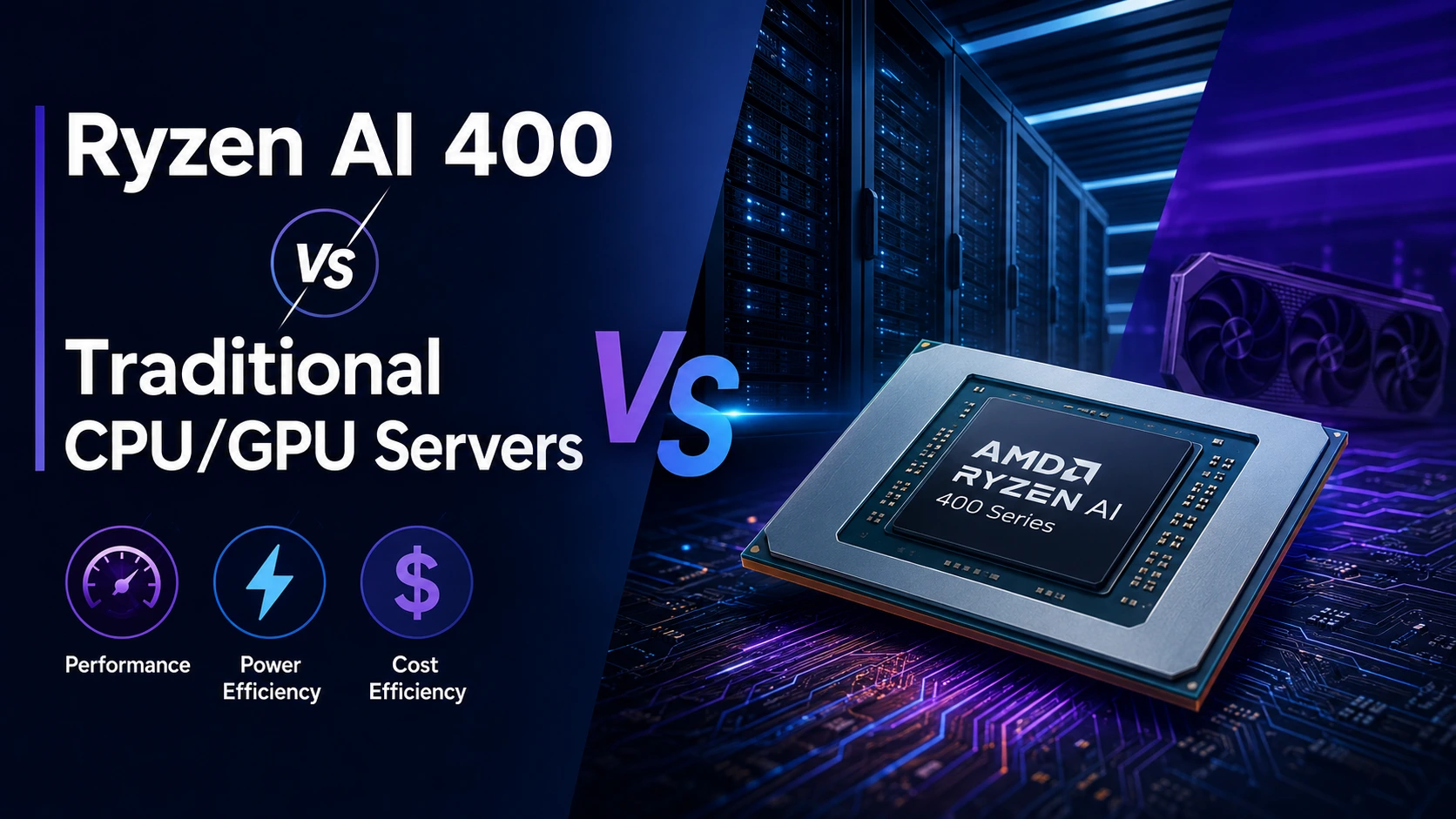
In this in-depth comparison, KW Servers examines how Ryzen AI 400-powered dedicated hosting stacks up against conventional CPU-only servers and GPU-accelerated machines across three critical dimensions: raw performance, energy efficiency, and total cost of ownership (TCO). Whether you are running an eCommerce platform, a SaaS application, a data analytics pipeline, or an AI inference service, this guide will help you choose the right dedicated server for your specific workload.
Quick Answer: Ryzen AI 400 dedicated servers deliver AI-capable performance at CPU-level pricing — a compelling option for businesses that need more than a standard server but cannot justify full GPU server costs.
1. Understanding the Ryzen AI 400 Series: What Makes It Different?
The AMD Ryzen AI 400 Series (codenamed Strix Point) is not simply an incremental upgrade to AMD's existing lineup. It represents a converged compute architecture that fuses three distinct processing engines onto a single die:
-
Zen 5 CPU cores for traditional computing workloads
-
RDNA 3.5 integrated GPU for graphics and lightweight GPU-accelerated tasks
-
XDNA 2 Neural Processing Unit (NPU) delivering up to 50 TOPS (tera-operations per second) of AI performance
This unified design has profound implications for dedicated server hosting. Historically, a server operator who needed AI inference capability had to provision a separate GPU node or pay for expensive cloud GPU instances. With Ryzen AI 400, AI acceleration becomes a native feature of the processor itself, available on every server that ships with this chip, at no additional hardware cost.
Key Specifications at a Glance
-
Process node: TSMC 4nm, enabling high performance-per-watt
-
CPU cores: Up to 12 Zen 5 cores (desktop/mobile configuration)
-
NPU: 50 TOPS via XDNA 2 architecture
-
Memory: LPDDR5x with high bandwidth, critical for memory-bound server workloads
-
TDP: Configurable between 15W and 54W, a significant advantage for colocation hosting
-
AI frameworks supported: Microsoft DirectML, ROCm, ONNX Runtime, OpenVINO
From a dedicated server performance standpoint, the Ryzen AI 400's hybrid architecture means workload scheduling is smarter by default. Routine compute tasks run on Zen 5 cores, graphics-intensive rendering is offloaded to RDNA 3.5, and AI inference flows through the NPU, all without developer intervention at the hardware level.
2. Performance Comparison: Ryzen AI 400 vs Traditional CPU Servers
When evaluating dedicated server performance, the conversation typically centers on CPU core count, clock speed, cache size, and memory bandwidth. Let's examine how the Ryzen AI 400 competes in each of these dimensions against traditional CPU-only server platforms.
General-Purpose CPU Throughput
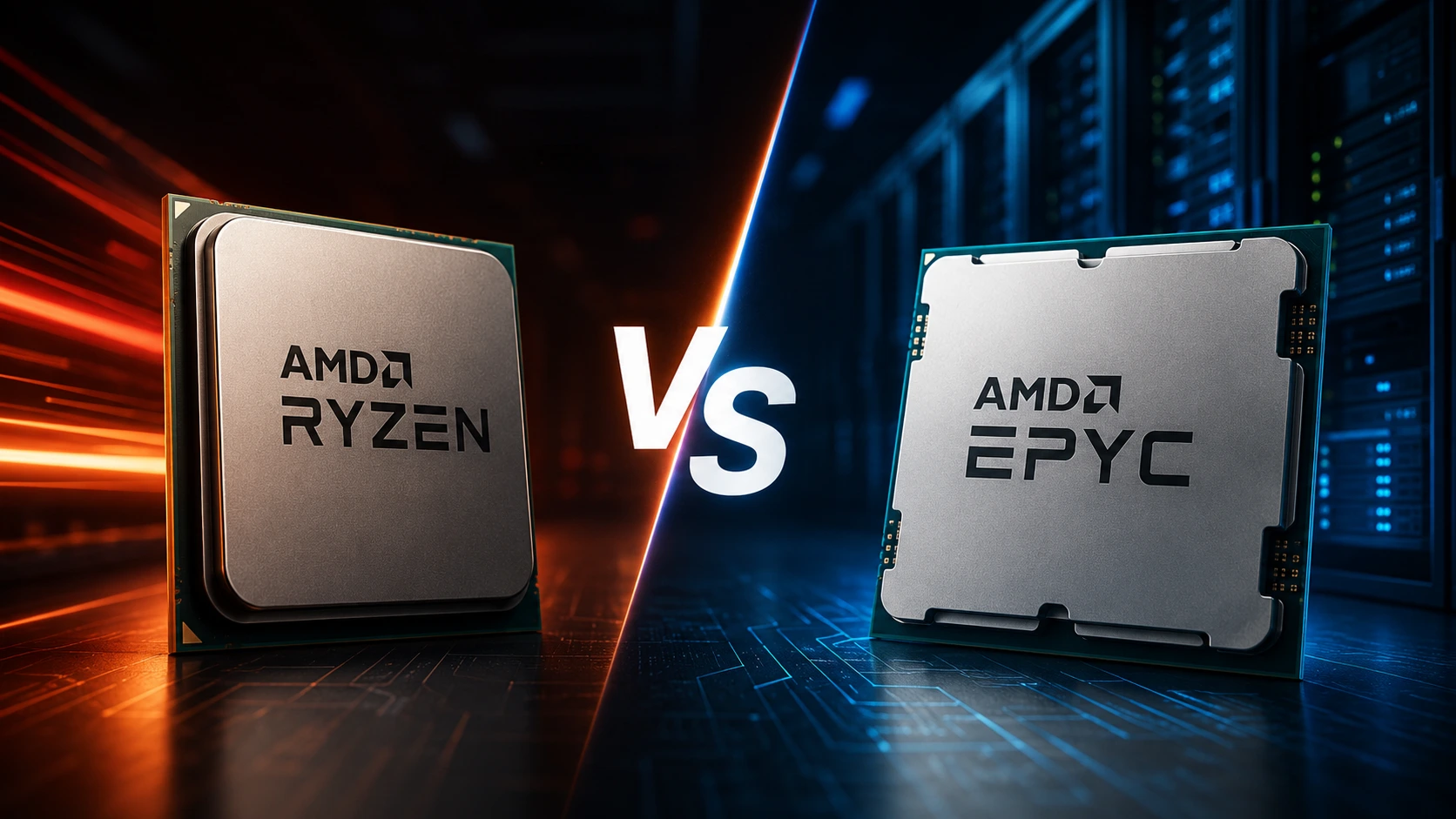
Traditional dedicated servers in the enterprise space are typically built on Intel Xeon or AMD EPYC processors, platforms optimized for multi-core server workloads such as database queries, web application hosting, and file serving. The Ryzen AI 400, being primarily a client-class processor, is not a direct architectural competitor to EPYC in high-core-count deployments.
However, for small to mid-size dedicated server configurations, the most common tier in managed and unmanaged hosting, the Ryzen AI 400 delivers competitive single-threaded performance thanks to Zen 5's improved IPC (instructions per clock). Benchmarks show Zen 5 achieving a 10 - 16% IPC improvement over Zen 4, which translates to real-world gains in web serving, PHP execution, and Node.js throughput.
AI Inference Performance: Where the Gap Becomes a Chasm
The most dramatic performance difference between a Ryzen AI 400 dedicated server and a traditional CPU server emerges when running AI inference workloads. Consider a typical use case: running a natural language processing model for content analysis, customer support automation, or spam filtering on a hosted application.
-
Traditional CPU server (Intel Xeon E-2300 series): Running LLM inference on CPU cores produces high latency and poor throughput, often 5 - 20 tokens/sec for a 7B parameter model
-
Ryzen AI 400 with NPU: The 50 TOPS NPU offloads quantized inference (INT4/INT8), dramatically reducing latency and freeing CPU cores for other tasks
-
GPU server (NVIDIA RTX 4090-class): Highest raw AI throughput, but at 3 - 10x the hardware and hosting cost
For businesses deploying AI-powered applications on dedicated hosting, including recommendation engines, image classification APIs, and real-time data processing pipelines, the Ryzen AI 400's NPU provides a genuine performance tier between CPU-only and full-GPU servers. This represents a structural gap in the market that AMD has effectively addressed.
Rendering and Media Workloads
For hosting providers and clients who run video transcoding, image processing, or browser automation tasks, the integrated RDNA 3.5 GPU within the Ryzen AI 400 provides hardware-accelerated encode/decode. This is particularly relevant for media hosting platforms, SaaS video tools, and screen-capture services running on dedicated infrastructure.
3. Side-by-Side Comparison: Dedicated Server Options at a Glance
The table below summarizes performance, power, and cost characteristics across the three main dedicated server hardware categories:
| Metric | Ryzen AI 400 Dedicated Server | Traditional CPU Server | GPU Server |
|---|---|---|---|
| CPU Architecture | Hybrid x86 + NPU | Standard x86 Cores | x86 + Discrete GPU |
| AI/ML Inference | Native NPU, Fast | CPU-only, Slow | GPU, Fast |
| TDP / Power Draw | ~45W (efficiency mode) | 65 - 250W | 200 - 600W+ |
| Monthly Hosting Cost | $80 - $150 | $100 - $300 | $500 - $2,000+ |
| Best Use Case | AI apps, web, edge workloads | General computing, databases | Heavy ML training |
| Memory Bandwidth | LPDDR5x, High efficiency | DDR4/DDR5, Standard | HBM/GDDR6, Very High |
| Setup Complexity | Low, Driver-ready | Low | High, CUDA/ROCm stack |
4. Power Efficiency: The Hidden Cost of Dedicated Server Hosting
When comparing dedicated server hosting costs, most buyers focus on the monthly rental or lease price. But power consumption is a significant and often underestimated factor in the true cost of running a server, especially in colocation environments where electricity is billed separately, or in high-density racks where thermal management drives up cooling costs.
TDP and Real-World Power Draw
The Ryzen AI 400 Series has a configurable TDP range of 15W to 54W. In a typical dedicated server deployment running mixed workloads, real-world power draw sits around 35–50W under load. Compare this with:
-
Intel Core i9-14900K (a comparable high-performance consumer CPU): TDP of 125W, peak draw up to 253W under sustained load
-
AMD EPYC 7003 (enterprise server CPU): 225W TDP baseline
-
NVIDIA RTX 4090 GPU: 450W TDP, plus the host CPU power draw
For a managed dedicated server running 24/7, the difference between a 45W platform and a 200W platform translates to approximately 1,188 kWh vs 1,752 kWh of additional power per year per server, a material line item in any data center budget. At an average commercial electricity rate of $0.12/kWh, that is a $68 annual difference per server, which compounds significantly across a fleet.
Cooling Implications for Data Center Density
Lower TDP directly reduces heat output, with cascading effects on data center infrastructure costs. Hosting providers operating Ryzen AI 400-based dedicated servers can achieve higher rack density without triggering additional cooling requirements, a meaningful operational advantage that can be passed on to clients through more competitive pricing.
5. Total Cost of Ownership: 3-Year TCO Analysis
A meaningful cost comparison for dedicated hosting must go beyond monthly rental fees to account for the full lifecycle cost of the server hardware, power, and management overhead. Below is a simplified 3-year TCO model:
| Cost Factor | Ryzen AI 400 Server | Traditional CPU Server | Cloud GPU Instance |
|---|---|---|---|
| Monthly Hosting Fee | $80 - $150 | $100 - $300 | $300 - $2,500 |
| Power Consumption Cost | Low (~$10 - $20/mo) | Medium ($30 - $80/mo) | Very High ($100+/mo) |
| Cooling Overhead | Minimal | Standard | Significant |
| 3 Year TCO Estimate | ~$3,600 - $6,480 | ~$5,760 - $13,680 | ~$14,400 - $90,000 |
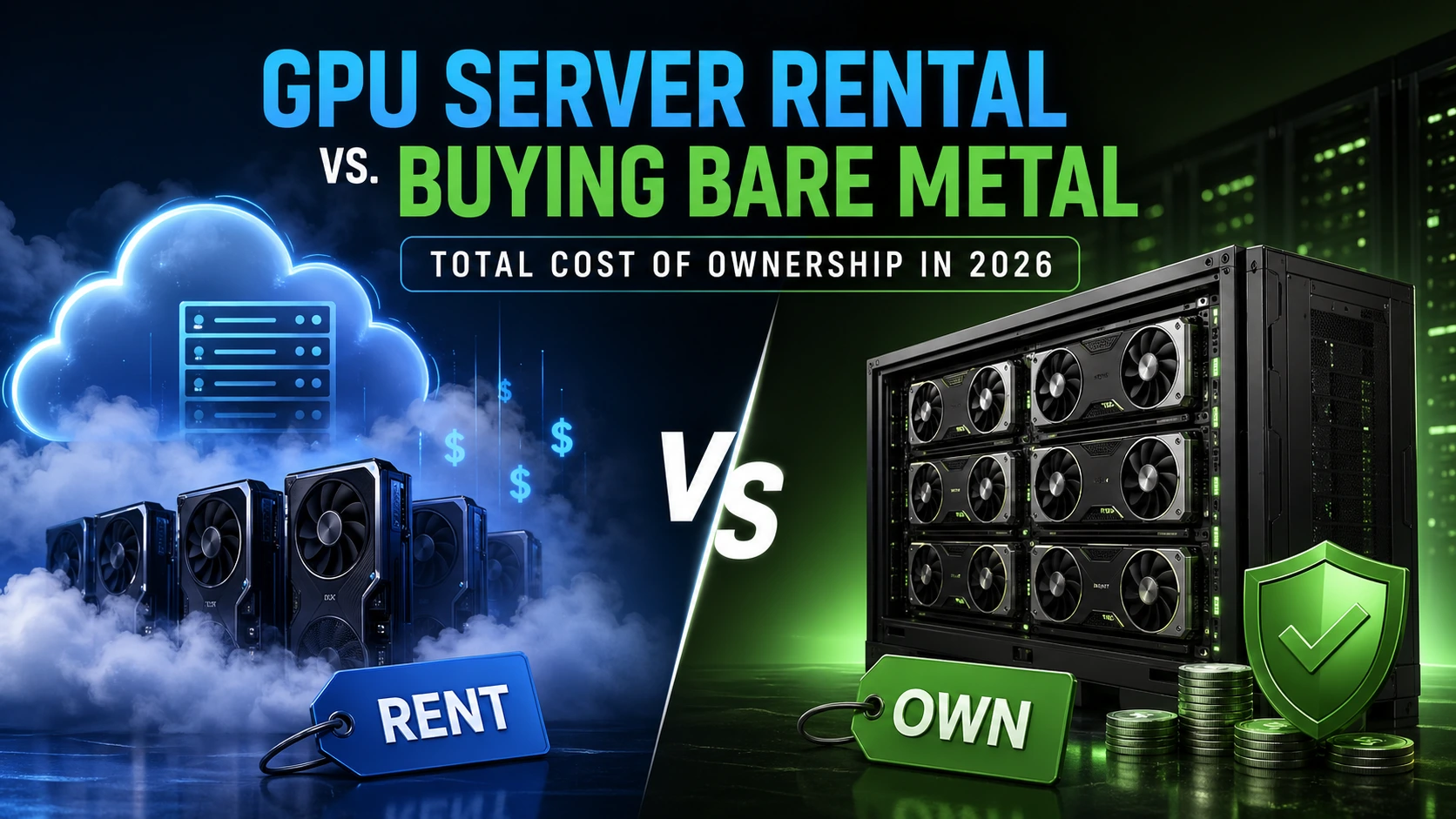
The TCO data reinforces a straightforward conclusion: Ryzen AI 400 dedicated servers occupy a genuinely attractive cost tier for businesses that need AI capability but cannot justify GPU server pricing. The 3-year savings vs. a cloud GPU instance can easily exceed $50,000 for a multi-server deployment.
6. Ideal Use Cases: Who Should Choose a Ryzen AI 400 Dedicated Server?
Not every workload is the right fit for every server platform. Here is a practical breakdown of which businesses and applications are best matched to each dedicated server type:
Ryzen AI 400 Dedicated Servers Are Best For:
-
AI-powered web applications running inference at the edge or application layer
-
SaaS platforms integrating LLM features such as AI writing assistants, chatbots, or document analysis
-
eCommerce businesses using product recommendation engines or fraud detection models
-
Media platforms requiring hardware-accelerated video transcoding without GPU server costs
-
Development and staging environments for AI application testing
-
Startups and scale-ups that need AI capability on a controlled, predictable hosting budget
Traditional CPU Dedicated Servers Remain the Better Choice For:
-
High-core-count database servers running PostgreSQL, MySQL, or MariaDB at scale
-
Pure web hosting and application serving with no AI workloads
-
Legacy enterprise applications that require validated x86 server environments
GPU Dedicated Servers Are Justified For:
-
Large-scale machine learning model training (not inference)
-
Rendering farms and scientific simulation workloads
-
High-throughput AI inference requiring hundreds of concurrent model calls
7. KW Servers: Dedicated Hosting Built for the AI Era
At KW Servers, we have been tracking the convergence of AI and infrastructure closely. Our dedicated server hosting solutions are designed to meet the needs of modern applications, from traditional compute-heavy workloads to AI-integrated platforms that require consistent, low-latency performance at a predictable cost.
Our Ryzen AI 400 dedicated server configurations offer:
-
Fully managed and unmanaged dedicated hosting options
-
NVMe SSD storage for ultra-fast I/O, essential for AI model loading times
-
High-bandwidth network uplinks to eliminate bottlenecks in data-intensive applications
-
24/7 technical support from infrastructure engineers who understand AI workload requirements
-
Flexible upgrade paths as your compute requirements grow
Whether you are migrating from shared hosting, scaling beyond a VPS, or right-sizing away from overpriced cloud GPU instances, KW Servers has a dedicated server plan built around your workload, not the other way around.
8. Common Questions About Ryzen AI 400 Dedicated Servers
Is the Ryzen AI 400 suitable for enterprise dedicated server workloads?
For small to mid-size enterprise deployments, particularly those integrating AI features into existing applications, yes. The Ryzen AI 400 provides enterprise-relevant performance with a much lower power and cost envelope than traditional enterprise CPU platforms. For very large-scale multi-core database workloads, AMD EPYC remains the preferred choice.
How does NPU-based AI inference compare to GPU inference in practice?
NPU inference is optimized for quantized model execution (INT4, INT8) and excels at sustained, low-power inference on smaller models (up to approximately 13B parameters, depending on quantization). GPU inference offers higher raw throughput and handles larger models, but at significantly higher cost and power draw. For most production AI workloads at the application layer, the NPU provides sufficient performance at a fraction of the cost.
Can I run popular AI frameworks on a Ryzen AI 400 dedicated server?
Yes. AMD has invested heavily in framework compatibility. The Ryzen AI 400 supports PyTorch (via ROCm and DirectML backends), ONNX Runtime with NPU execution providers, OpenVINO, and Hugging Face libraries with AMD-optimized quantization. Most AI developers can migrate existing inference workloads with minimal code changes.
What is the difference between a dedicated server and a VPS for AI workloads?
A dedicated server provides exclusive access to all physical hardware resources — including the NPU on a Ryzen AI 400 host. A VPS (Virtual Private Server) shares physical resources with other tenants, and NPU access through a hypervisor layer is not yet widely available or consistent. For AI workloads requiring reliable, low-latency inference, a dedicated server is strongly preferred over a VPS.
9. Making the Right Decision: A Framework for Choosing Your Dedicated Server
Use the following decision framework when evaluating your dedicated server options:
-
Step 1 - Define your primary workload: Is it compute, AI inference, ML training, media, or database?
-
Step 2 - Estimate your AI requirements: How many concurrent inference requests do you expect? What model sizes are you running?
-
Step 3 - Calculate your power budget: Are you in a colocation facility with metered power? What is your monthly electricity cost threshold?
-
Step 4 - Project your 3-year TCO: Compare monthly fees, power costs, and scaling costs across server options
-
Step 5 - Evaluate vendor support: Does your hosting provider have experience with AI-ready dedicated server configurations?
For many businesses reaching steps 2 and 3, the Ryzen AI 400 dedicated server emerges as the logical choice, delivering meaningful AI performance, low power draw, and competitive hosting costs without the complexity and expense of a full GPU server deployment.
10. Conclusion: The Dedicated Server Landscape Has Changed
The arrival of the AMD Ryzen AI 400 Series marks a genuine inflection point in the dedicated server hosting market. For the first time, businesses can access on-chip AI acceleration, delivered through a production-grade NPU, on a platform that fits within traditional CPU server cost and power budgets. The binary choice between standard CPU servers and expensive GPU infrastructure is no longer the only option.
Traditional CPU servers remain the right answer for pure compute and database workloads at scale. GPU servers remain justified for large-scale model training and extreme-throughput inference. But for the growing majority of businesses running AI-integrated applications, recommendation systems, inference APIs, and intelligent SaaS products, the Ryzen AI 400 dedicated server represents a compelling middle ground, one that KW Servers is purpose-built to deliver.
Ready to explore Ryzen AI 400 dedicated server configurations from KW Servers? Contact our hosting consultants to discuss your workload requirements and receive a customized infrastructure recommendation.
About KW Servers: KW Servers is a dedicated server hosting provider specializing in high-performance infrastructure for AI-integrated applications, enterprise workloads, and rapidly scaling businesses. Our engineering team has deep experience configuring and optimizing dedicated server environments for modern compute demands.